Actividades en Tegalrejo
Actividades, atracciones y tours
Visita Tegalrejo
![Batik (Javanese pronunciation: [ˈbateʔ]; Indonesian: [ˈbatɪk]) is a technique of wax-resist dyeing applied to whole cloth, or cloth made using this technique. Batik is made either by drawing dots and lines of the resist with a spouted tool called a canting (IPA: [ʈ͡ʂantiŋ], also spelled tjanting), or by printing the resist with a copper stamp called a cap (IPA: [ʈ͡ʂap], also spelled tjap). The applied wax resists dyes and therefore allows the artisan to color selectively by soaking the cloth in one color, removing the wax with boiling water, and repeating if multiple colors are desired.
A tradition of making batik is found in various countries, including Nigeria, China, India, Malaysia, Philippines and Sri Lanka; the batik of Indonesia, however, is the most well-known. Indonesian batik made in the island of Java has a long history of acculturation, with diverse patterns influenced by a variety of cultures, and is the most developed in terms of pattern, technique, and the quality of workmanship. On October 2009, UNESCO designated Indonesian batik as a Masterpiece of Oral and Intangible Heritage of Humanity.
Source: Wikipedia
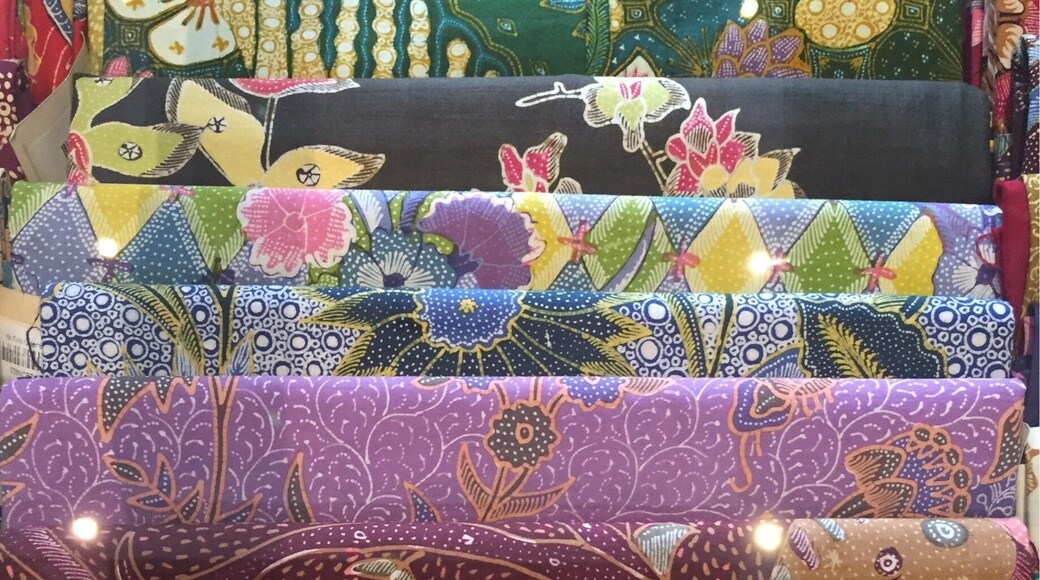
These batik clothes are sold at one of the high end hotel's gift shop in Yogyakarta. They are hand drawn and painted and hence command a high price! It ranges over US$200 although some cheap batik at the market can be found for a mere US$2. The difference lies in the quality, the design and also the amount of skill that's needed to make them.
Common batik wear are made from cotton. The ones shown here are silk and limited in quantity produced.
Yogyakarta and Surakata (Solo) are two cities where batik originated in Indonesia.
#unesco](https://images.trvl-media.com/place/1718/09cd56ac-2be9-4518-ac77-e217d037b46b.jpg?impolicy=fcrop&w=1040&h=580&q=mediumHigh)
![Batik (Javanese pronunciation: [ˈbateʔ]; Indonesian: [ˈbatɪk]) is a technique of wax-resist dyeing applied to whole cloth, or cloth made using this technique. Batik is made either by drawing dots and lines of the resist with a spouted tool called a canting (IPA: [ʈ͡ʂantiŋ], also spelled tjanting), or by printing the resist with a copper stamp called a cap (IPA: [ʈ͡ʂap], also spelled tjap). The applied wax resists dyes and therefore allows the artisan to color selectively by soaking the cloth in one color, removing the wax with boiling water, and repeating if multiple colors are desired.
A tradition of making batik is found in various countries, including Nigeria, China, India, Malaysia, Philippines and Sri Lanka; the batik of Indonesia, however, is the most well-known. Indonesian batik made in the island of Java has a long history of acculturation, with diverse patterns influenced by a variety of cultures, and is the most developed in terms of pattern, technique, and the quality of workmanship. On October 2009, UNESCO designated Indonesian batik as a Masterpiece of Oral and Intangible Heritage of Humanity.
Source: Wikipedia
These batik clothes are sold at one of the high end hotel's gift shop in Yogyakarta. They are hand drawn and painted and hence command a high price! It ranges over US$200 although some cheap batik at the market can be found for a mere US$2. The difference lies in the quality, the design and also the amount of skill that's needed to make them.
Common batik wear are made from cotton. The ones shown here are silk and limited in quantity produced.
Yogyakarta and Surakata (Solo) are two cities where batik originated in Indonesia.
#unesco](https://images.trvl-media.com/place/1718/09cd56ac-2be9-4518-ac77-e217d037b46b.jpg?impolicy=fcrop&w=1040&h=580&q=mediumHigh)
- Descubre actividadesDescubre miles de experiencias, desde actividades y atracciones hasta tours de un día y traslados.
- Reserva fácilmenteEvita las filas: reserva entradas en línea para las atracciones principales en unos minutos. Hay cancelación gratuita en muchas actividades.
- Accede a beneficiosLos socios ahorran un % o más al reservar actividades.
Actividades principales
Tours y excursiones de un día
Ver las 68 actividades
Yogyakarta: Borobudur Sunrise (subida asegurada) & Prambanan
Tours privados y personalizados
Ver las 30 actividades
Yogyakarta: Mt. Excursión al amanecer de Merapi, Jomblang y la cueva Pindul
Aventura y actividades al aire libre
Ver las 15 actividades
Tour guiado por el amanecer del Monte Bromo y el Volcán Ijen Blue Fire
Alimentos, bebidas y vida nocturna
Ver las 7 actividades
Yogyakarta: recorrido privado a pie culinario y patrimonial nocturno
Espectáculos y conciertos
Ver las 6 actividades
Yogyakarta: boleto de entrada al Roro Jonggrang Ballet Prambanan
Lugares más visitados

Calle Malioboro
En tu viaje a Yogyakarta, podrás deleitarte con las tiendas de Calle Malioboro. Cuando visites esta zona, podrás recorrer sus museos interesantes y explorar sus opciones artísticas.

Monumento Tugu Pal Putih en Yogyakarta
Para saber más sobre la historia de Gowongan, solo tienes que ir a Monumento Tugu Pal Putih en Yogyakarta. Haz tiempo para visitar las tiendas de esta zona con una rica herencia cultural.

Zoo Gembira Loka
Descubre las especies autóctonas y exóticas que viven en Zoo Gembira Loka cuando viajes a Yogyakarta. Haz tiempo para visitar las tiendas de esta zona con una rica herencia cultural.

Tamansari (castillo de agua)
Cuando estés en Kraton, observa las exhibiciones del Taman Sari, un museo con historia propia. Haz tiempo para visitar las tiendas de esta zona con una rica herencia cultural.

Complejo de Kraton
Palacio Real de Yogyakarta es solo una de las atracciones que te ofrece Kraton, ¡anímate a conocer las demás! Haz tiempo para visitar las tiendas de esta zona con una rica herencia cultural.

Palacio Presidencial de Yogyakarta
Aprende sobre la historia de Ngupasan con una visita a Palacio Presidencial de Yogyakarta. Haz tiempo para visitar las tiendas de esta zona con una rica herencia cultural.

Museo del Fuerte Vredeburg
Para saber más sobre la historia de Ngupasan, solo tienes que visitar Museo del Fuerte Vredeburg. Haz tiempo para visitar las tiendas de esta zona con una rica herencia cultural.
Malioboro Mall (centro comercial)
En tu viaje a Yogyakarta, podrás comprar los regalos para llevar a casa en Malioboro Mall (centro comercial). En esta zona con una rica herencia cultural, uno de los mejores planes es recorrer sus museos interesantes y divertirte con sus opciones de entretenimiento.
Parque Alun Alun Kidul
Conéctate con la naturaleza en Parque Alun Alun Kidul, un espacio verde imperdible de Kraton. Haz tiempo para visitar las tiendas de esta zona con una rica herencia cultural.