The three-story hillside house has a front garden full of plants. The property is located in a separate hamlet with only six houses and a chapel complete with a piazzetta; it is absolutely quiet, with no traffic noise. The terrace offers a magnificent view of the mountainous landscape, which always appears green. The house has neighbors on two sides. Through the garden, you reach the main entrance on the lower level, which includes the kitchen, utility room, and cellar. In the summer, the pergola is a wonderful place to sit and eat. On the first floor, there is a large bathroom, a living room with a daybed, a bedroom, and the winter kitchen, from which you can access a small alley on the other side that leads to the chapel. On the second floor is a spacious, converted lounge with a Swedish wood-burning stove, a sofa, a seating area, and a dining table for cooler days. The rooftop terrace and a second bedroom branch off from here. Loading and unloading is possible at the upper kitchen entrance.
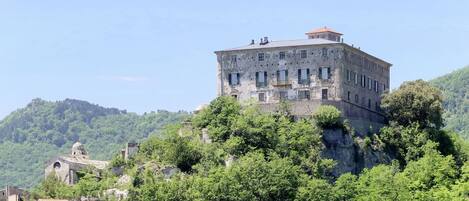
Location: 10 minutes by car to the sea; distance to the beach: 6 km. The house enjoys a wonderfully quiet location, as no road leads directly up to it. You’ll look out onto a sea of green Mediterranean vegetation, since the land below the house cannot be built on. The house is not isolated; it has neighbors to the right and left. High stone walls separate the neighboring properties and provide privacy. Behind the house lies the small Santa Catarina Chapel, which is open to visitors. The key is kept by the neighbor, Maria Folco. In the village itself, there’s a bar and a restaurant called “Bargallo,” which serves traditional Ligurian specialties. It’s worth reserving a table for Sunday lunch and working your way through the 14-course menu. But feel free to stop after the three pasta courses, which are always homemade. The main courses aren’t usually as famous. There’s now also an apartment hotel, which, fortunately, is very discreetly designed and operated.
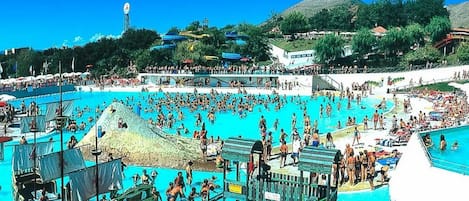
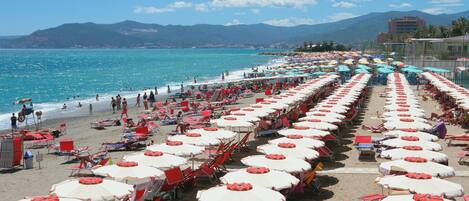
The most popular swimming spots: Along the coast, you have an unlimited selection of swimming and beach options. These alternate between sandy, pebble, and rocky beaches. You can rent a spot at one of the beach clubs with lounge chairs, umbrellas, and changing rooms—as Italian vacationers usually do—or head to one of the so-called “free” beaches, where you have to bring your own lounge chairs and umbrellas. Many of the free beaches now also have cafés and beach bars. However, you can always visit the cafés at the managed beaches as well. Dogs are not welcome anywhere—unless you try the rocky beach at the entrance to Varigotti, though it’s not the best spot for swimming there. The most beautiful beach is undoubtedly “I Saraceni” near Varigotti. On the small peninsula, you can fully enjoy the afternoon and evening sun on the western side. If you negotiate skillfully, you might even be able to use the pool. The bar is free.
Sights: The house houses many art-historical guides to the immediate and wider surroundings. Of course, Genoa (60 km) has always been worth a day trip, especially since it was spruced up for its stint as the European Capital of Culture. Particularly worth seeing are the medieval town of Albenga with its early Christian baptistery, the family towers, and the maritime museum, as well as the pirate haven of Noli and its churches. The best way to reach Verezzi is on foot from Gorra. And for a visit to the town square, Finalborgo is an ideal choice with its two castles and the renovated St. Catherine’s Monastery. Finale Marina, located between Savona and Alassio, is one of the most elegant and oldest seaside resorts in the area, boasting a beautiful promenade. But there are also beautiful mountain villages and small towns like Zuccarello that are well worth a visit. Especially on Saturdays and Sundays, you shouldn’t necessarily head to the beach unless you can secure a parking spot by 9 a.m. at the latest.